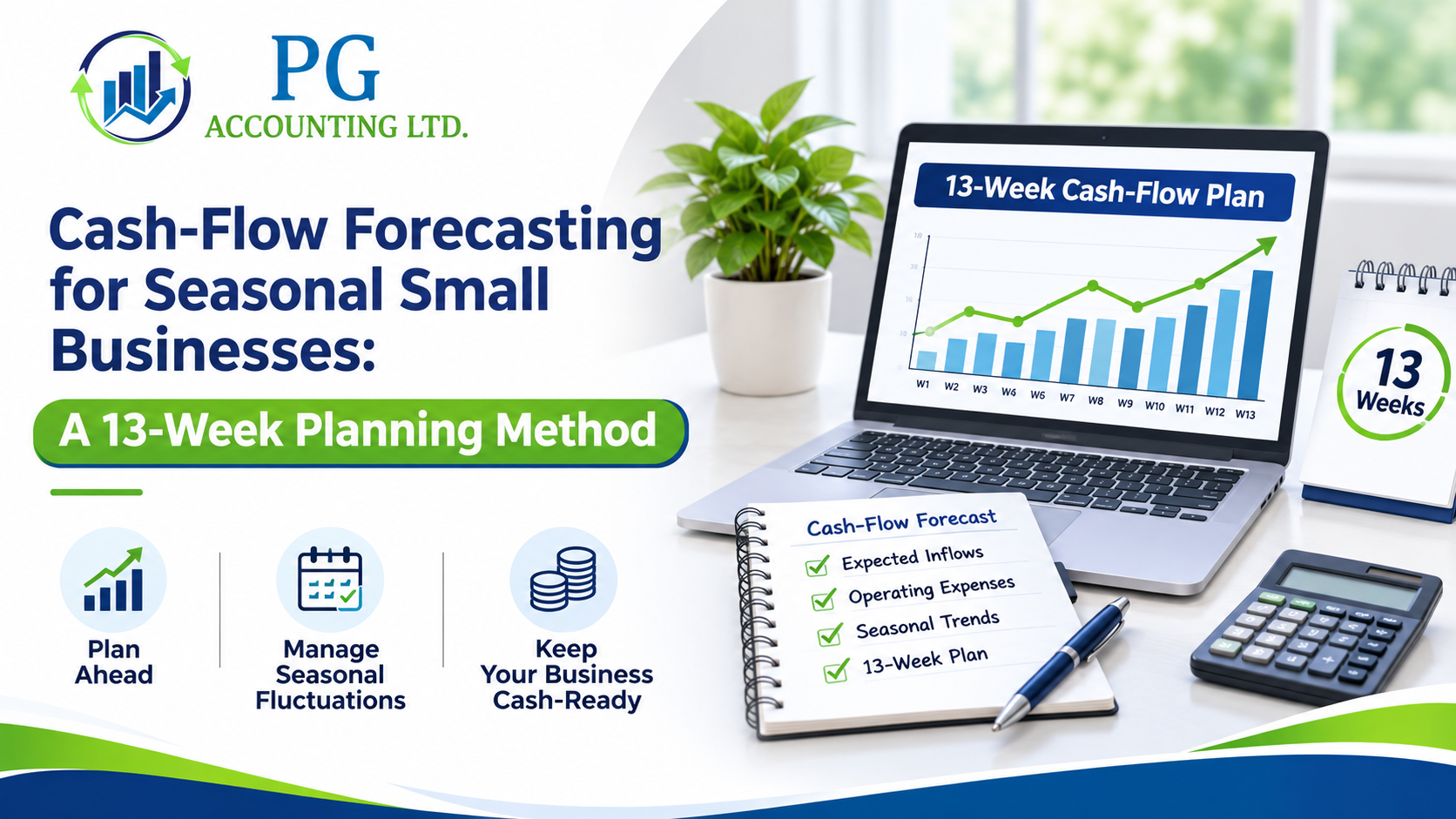
A 13-week cash flow forecast for a small business provides an estimated picture to the business owner of when cash is expected to enter and leave the business over the next quarter. This method does not estimate only revenue and profit, but also the weekly bank balance after customers’ planned activities. This method helps to spot cash shortages when there is enough time to respond.
It is not necessary that the most complicated spreadsheet is the most useful forecast, but it is important to consistently maintain planning tools that are created from realistic assumptions and regular comparison with actual transactions. A 13-week cash flow forecast small business guide will explain how to build a rolling forecast and help to understand what the numbers mean. A 13-week cash flow forecast for small business surrey helps the owner avoid common mistakes and use the forecast in everyday business decisions.
A 13-week cash flow forecast is important because it focuses on the timing of money entering and leaving the business. It is a useful method, especially when customer collections and payroll, along with supplier payments, occur on different schedules. The method is helpful to enhance the financial statement rather than replacing it. If you are really interested in knowing more about 13-week cash flow and how it works, or you have any 13-week cash flow forecast small business questions in your mind, stay engaged with us, as this blog will provide you with the best information.
What is the Method To Build A 13 Week Cash Flow Forecast?
This process can begin with sufficient balances, but the important thing is to build a useful model; there is no need for it to be complicated because every number should be traceable to a record.
- Start with available cash
- List expected weekly receipts
- Project upcoming payments and commitments
- Calculate cash flow week by week
- Apply a straightforward rolling calculation
- Try to find the lowest balance, not just the final one
- Test different cash flow scenarios
- Model slower calculations without exaggerating risks
- Determine spending and growth decisions
- Keep the forecast correct with weekly review
- Compare forecast activity with the bank
- Give each and every important assumption to the owner
- Do not confuse borrowed capacity with deposit cash
- Do not treat every sale as an immediate receipt
- Connect the forecast to financial reports
- Know when outside advice can help
Why Is the 13 Week Time Horizon Important?
The factual truth is that accuracy decreases as the forecast range increases, and most organizations use a 13-week time horizon for regular cash flow forecasting because it strikes a good balance between accuracy and range. In any case, the time horizon is chosen mindfully according to business objectives, as it evaluates the range and depth of information that a business owner can feasibly uncover from their forecast.
Some Important Factors Why Companies Use a 13 Week Time
Horizon For Cash Flow Forecast:
Reliable And Accurate Perception
The 13-week cash flow offers reliability by using previous data and transactions to project short-term cash flow.
Precise Detail For Better Control
Basically, this model breaks down data into weekly reporting periods rather than long timeframes. In this model, some tools even deliver reports on a daily basis, and this detailing allows finance and treasury teams to match forecasts with daily operations, including scheduling supplier payments and making investment decisions.
Proactive Liquidity Risk Management
With the help of weekly liquidity visibility, a 13-week cash flow forecast enables companies to identify potential medium-term liquidity issues with precision. In this timeframe, companies can address cash shortfalls through measures such as securing external financing and providing actionable insights to mitigate risks.
Conclusion
Effective cash flow forecasting is not just about predicting how much money will be in the bank; it is a method to understand when money will come in. With the help of a 13-week cash flow forecast, business owners also know when commitments must be met. Moreover, businesses also understand whether available resources can support planned business activities or not.
A 13-week cash flow forecast is a modern method used by many companies, as it focuses on the cash you have and expect to receive. The 13-week cash flow forecast model determines the cash you expect to pay out of your business in the period of 13 weeks. If you want to stay legal and maintain your business, you can contact PG Accounting Ltd., as our accounting experts provide accuracy and a strategic approach to every financial decision.
Frequently asked questions
Why is this model cash flow forecasting named 13 weeks?
Because 13 weeks equals one quarter, which gives you a clear weekly roadmap of your actual cash for the next three months; this model acts as a bridge between big-picture quarterly goals and daily bank balance.
How often should a business update its cash flow?
Businesses with tight cash positions or irregular customer positions should update their forecast weekly, while businesses with more predictable operations can review the forecast monthly.
Is it true that a profitable business can experience a cash shortage?
Yes, a business can experience insufficient cash while reporting accounting profit because customers do not pay pending bills or debt obligations are due.
Is cash flow similar to profits?
No, profits are measures of whether revenue exceeds expenses over periods, while cash flow measures the actual movement of money in the business.